1. Executive Summary
The KwaZulu-Natal Department of Economic Development, Tourism and Environmental Affairs (EDTEA), in partnership with Jozini Local Municipality, successfully convened the Jozini Waste Management and Circular Economy Technical Engagement Programme on 05 June 2026. The programme aimed to explore innovative waste management solutions while advancing circular economy principles as a catalyst for economic development, environmental sustainability, and job creation.
The engagement brought together government officials, industry experts, academic institutions, community representatives, waste pickers, recycling organisations, and Producer Responsibility Organisations (PROs). The event provided a valuable platform for stakeholders to exchange knowledge, discuss challenges, and identify opportunities for improving waste management systems within Jozini Municipality and the broader KwaZulu-Natal Province.
Municipalities across South Africa continue to face significant challenges related to increasing waste generation, illegal dumping, limited landfill capacity, and constrained financial resources. However, waste also presents substantial opportunities for resource recovery, recycling, enterprise development, and employment creation. The circular economy model promotes the reduction, reuse, recycling, and recovery of materials, thereby minimizing environmental impacts while stimulating economic growth.
The programme sought to promote sustainable waste management practices, strengthen the implementation of Integrated Waste Management Plans (IWMPs), support the integration of waste pickers into the formal economy, enhance stakeholder collaboration, and identify opportunities for enterprise development and poverty alleviation through circular economy initiatives. Additionally, the engagement aimed to increase awareness of the legislative and regulatory framework governing waste management in South Africa.
Opening Remarks
Mr. T. Gambu welcomed all delegates and dignitaries, ensuring that all official protocols were duly observed. His Worship, the Mayor of Jozini Local Municipality, Councillor N.S. Myeni, officially welcomed guests and stakeholders to the municipality and the Province of KwaZulu-Natal.
Provincial Waste Management Perspective
Dr. B.R. Dlamini, Chief Director: Environmental Management Services, presented the provincial vision for waste management in KwaZulu-Natal. His presentation highlighted the importance of Integrated Waste Management Plans, municipal waste by-laws, Waste Management Officers (WMOs), licensing requirements, regionalisation strategies, and compliance monitoring. He emphasized the need for municipalities to strengthen governance systems and improve environmental compliance in support of sustainable waste management.
Mrs. Khumalo, Waste Manager at Jozini Local Municipality, provided an overview of the municipality’s current waste management status. She outlined several operational challenges, including the absence of a Buy-Back Centre (BBC) within the municipality. She noted that this significantly impacts waste pickers, who are often required to travel long distances to access facilities where recyclable materials can be sold. The lack of local recycling infrastructure remains a major obstacle to waste diversion and economic participation within the sector.
Keynote Address
The keynote address was delivered by Mr. K. Mokoena, Chief Director from the Department of Forestry, Fisheries and the Environment (DFFE). He provided an overview of South Africa’s Circular Economy Waste Strategy and emphasized the urgent need for effective waste management and waste minimisation practices. Mr. Mokoena highlighted several successful waste minimisation projects funded by the Department across the country and stressed the importance of establishing a Buy-Back Centre in Jozini to support waste pickers and improve waste diversion from landfill sites.
Producer Responsibility and Waste Picker Integration
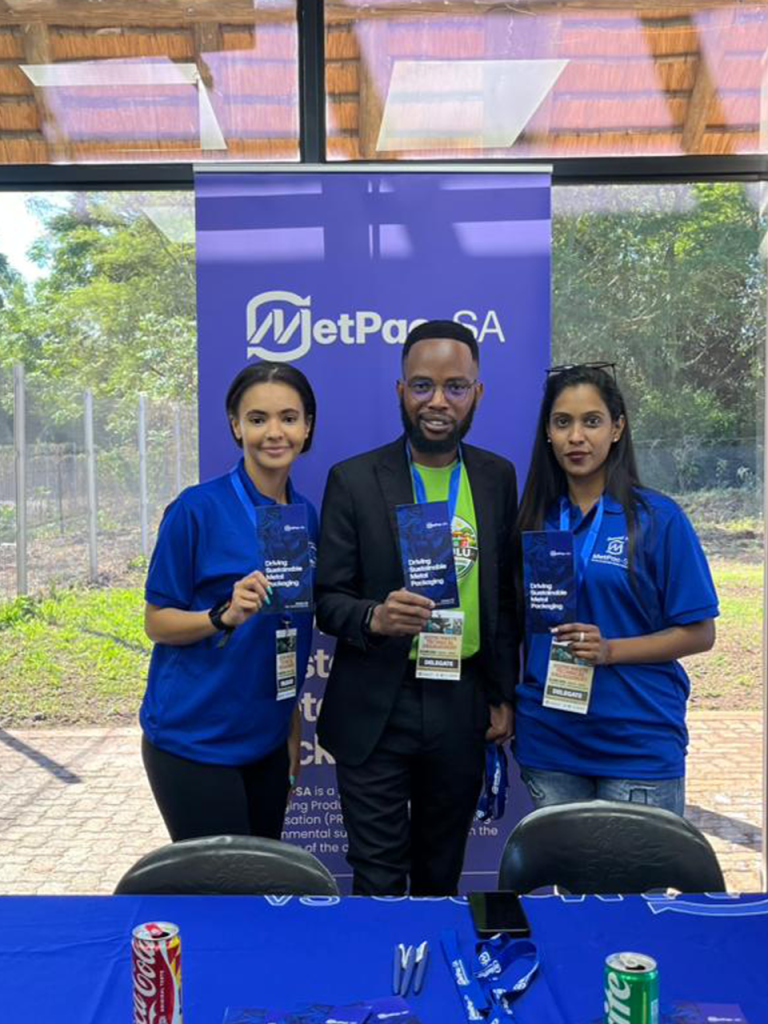
Dr. Kishan Singh, Chief Executive Officer of MetPac-SA, addressed delegates on the role of Extended Producer Responsibility (EPR) in advancing circular economy objectives. He presented MetPac-SA as South Africa’s leading Producer Responsibility Organisation representing the metal packaging sector.
Dr. Singh explained the concept of infinite recyclability of metal packaging and highlighted the importance of separation at source in achieving circular economy outcomes. His presentation focused on waste picker registration and the Waste Picker Integration Policy, a national initiative led by DFFE aimed at ensuring waste pickers are formally registered on the national database and eligible to receive waste picker service fees.
He further showcased the support provided through MetPac-SA programmes, including personal protective equipment (PPE), enterprise development opportunities, capacity-building training, and waste picker service fees. It was encouraging to observe several waste pickers from Jozini attending the engagement wearing PPE sponsored through MetPac-SA initiatives. Dr. Singh concluded by acknowledging and thanking waste pickers across South Africa for their invaluable contribution to environmental sustainability and resource recovery.
Academic Research and Youth Participation
A compelling presentation was delivered by Mr. Sphamandla Sokhela, a Master’s student in Environmental Science from the University of Zululand. His research focused on the concept of “Studentified Waste,” highlighting the significant volumes of waste generated by students at tertiary institutions.
Mr. Sokhela showcased innovative geographic mapping technologies that identify illegal dumping hotspots throughout KwaZulu-Natal. Through the use of these maps, his organisation has successfully coordinated clean-up campaigns and environmental awareness programmes within affected communities. The Studentified Waste initiative aims to mobilise students to actively participate in recycling and waste diversion activities, positioning young people as key drivers of the circular economy. The work undertaken by these students serves as an inspiring example of youth leadership in environmental stewardship.
Panel Discussion: Scaling SMMEs and Community Enterprises
A panel discussion was convened to explore opportunities for scaling Small, Medium and Micro Enterprises (SMMEs) and community enterprises within the waste sector. The panel comprised:
- Dr. Kishan Singh – Chief Executive Officer, MetPac-SA
- Ms. Kayla Trumpelmann – PRO Alliance
- Ms. Tlou Sebola – PETCO
- Ms. Nokubonga Manyango – Thando Solutions
The discussion highlighted the critical role of SMMEs as drivers of economic growth and job creation in South Africa. Panel members emphasized the contribution of emerging enterprises to environmental sustainability and waste management innovation.
Ms. Trumpelmann presented on the digitisation of Buy-Back Centres, an initiative designed to modernise recycling infrastructure and improve access to reliable recycling data. The panel agreed that increased support for SMMEs would strengthen the waste management sector and accelerate the transition towards a circular economy.
Stakeholder Participation
The event was attended by representatives from EDTEA, Jozini Local Municipality, DFFE, uMkhanyakude District Municipality, academic institutions, recycling organisations, Producer Responsibility Organisations, environmental practitioners, waste management specialists, SMMEs, waste pickers, and community-based organisations.
The diverse stakeholder representation enabled robust engagement and facilitated meaningful discussions on improving waste management practices and circular economy implementation.
2. Key Findings and Outcomes
Participants collectively agreed that waste should be recognised as an economic resource rather than merely a disposal challenge. Key findings emerging from the engagement included:
- The need for improved recycling and resource recovery infrastructure.
- Increased public awareness and environmental education programmes.
- Formal integration and support of waste pickers within municipal waste systems.
- Strengthened compliance with environmental legislation and waste management regulations.
- Enhanced support for SMMEs operating within the waste and recycling sectors.
- Greater investment in circular economy initiatives and public-private partnerships.
Short-Term Priorities
- Conduct awareness and education campaigns.
- Accelerate the registration of waste pickers.
- Strengthen municipal waste collection services.
- Improve stakeholder coordination and communication.
Medium-Term Priorities
- Establish Material Recovery Facilities (MRFs) and Buy-Back Centres.
- Expand recycling programmes within rural and urban communities.
- Support green entrepreneurship and enterprise development initiatives.
- Enhance waste diversion programmes and infrastructure.
Long-Term Priorities
- Develop circular economy hubs within municipalities.
- Invest in waste beneficiation and resource recovery projects.
- Create sustainable green jobs through circular economy interventions.
- Strengthen local value chains associated with recycling and recovered materials.
3. Conclusion
The Jozini Waste Management and Circular Economy Technical Engagement Programme successfully provided a platform for knowledge sharing, policy dialogue, and stakeholder collaboration. The discussions reinforced the understanding that effective waste management can contribute significantly to environmental protection, economic development, poverty alleviation, and job creation.
The engagement highlighted the importance of strengthening recycling infrastructure, supporting waste pickers, promoting enterprise development, and fostering partnerships across government, industry, academia, and communities. Continued collaboration and implementation of the identified actions will contribute towards the development of a cleaner, greener, and more resilient Jozini Municipality and KwaZulu-Natal Province.